Our magazine is a garden
for ideas
before the world
discovers them.

An international publication for young researchers. Rigorous. Thoughtful. Human.

Some ideas arrive fully formed. Most need a place to grow.

Welcome to Celestrella.

Editor’s letter

Our Mission

Celestrella grew out of a very simple realization. Look around, and you’ll find students everywhere quietly doing incredible work — spending months running experiments, gathering data, and learning complex skills on their own initiative. The sad part is that most of this brilliant work never leaves the classroom.

We built this publication to give those ideas a home because the work itself is entirely worth reading. We are still small, and Issue 1 is just our first step in exploring what student research can achieve with proper editorial care.

We care deeply about honesty, curiosity, and effort rather than absolute perfection. If that resonates with you, whether as a reader or a future contributor, welcome aboard. We’re glad to have you with us.

Dana Yergaliyeva
Founding Editor, Celestrella
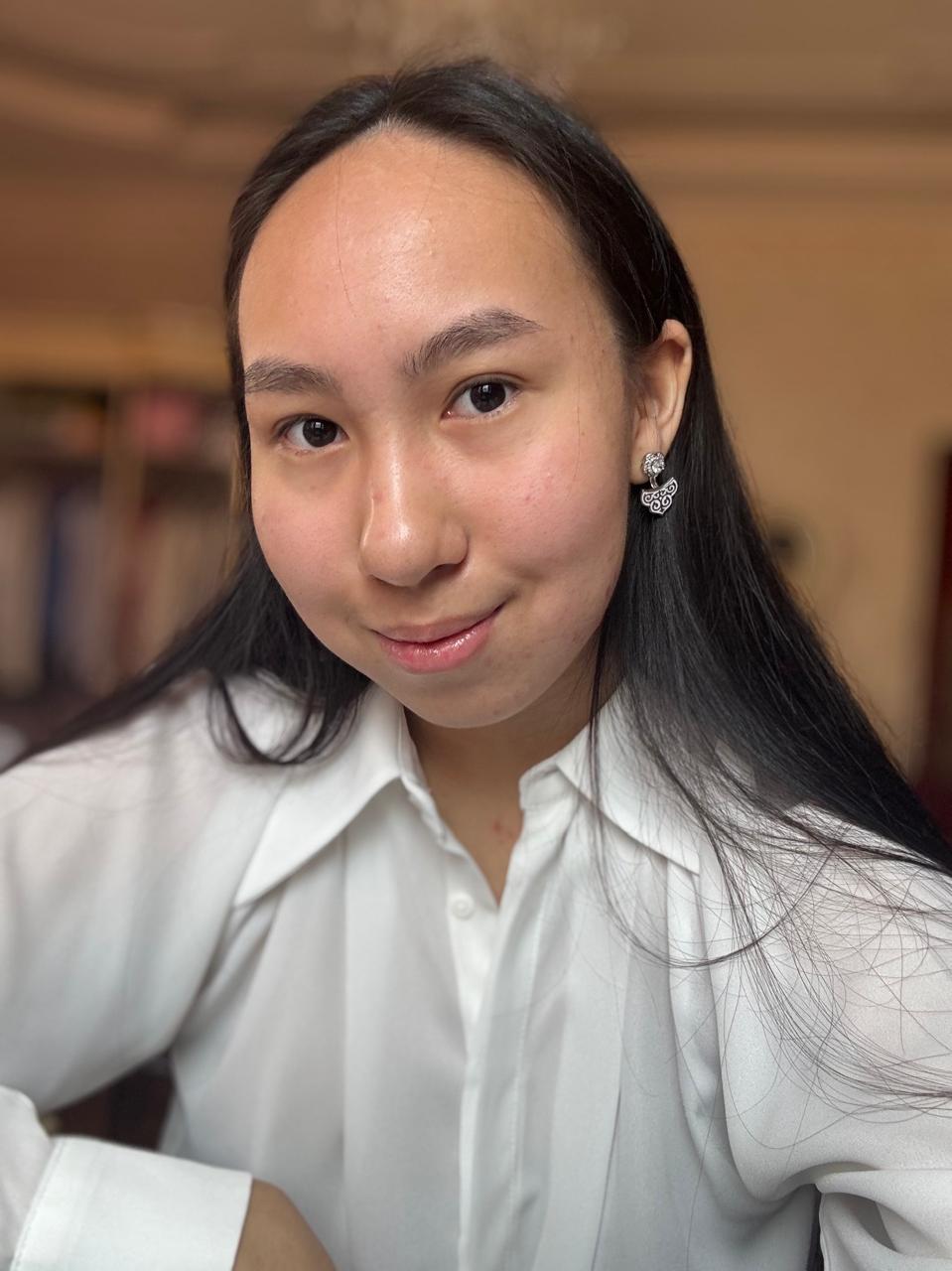
Dana Yergaliyeva, Founding Editor

Our experience

Before Celestrella went looking for researchers everywhere, it started somewhere specific.

Celestrella began as the student journal of NIS Aktau. That history is part of the record, not separate from it.

Make something worthy of a record.

For research papers, field notes, and questions that have become too alive to stay private. Everything published here stays published, permanently attributable to the person who did the work — that is what makes this an issue, and not a page.

  1. Submit a question you can’t put down.
  2. We read it ourselves. Most work goes back at least once, with real notes.
  3. What survives gets published exactly as Issue 2’s opening piece — permanently.
Back to the top

Become a member

Want to help build the next issue?

Celestrella is run by a small editorial team, not a large staff. If you edit carefully, design with restraint, or want to help find the next researcher worth featuring, we want to hear from you.


Celestrella has grown alongside

Our experience

Origin

NIS Aktau, May 2025 – May 2026

For one academic year, Celestrella served as the primary student journal of Nazarbayev Intellectual School, Aktau — covering the research, projects, and academic life of its students before growing into an independent, international publication.

Registered with the Kazakhstan National IP Registry, 2026.

Staff, NIS Aktau era

  • Founding Editor Dana Yergaliyeva
  • Staff Ms. Sagyndykova, Tilektes Amirkhanova, Madina Bazaar, Almira Amanbayeva, Aiym Ospanova

Issue 1 — Arup: The Handprint Paradigm

Editor’s letter

About Arup and Why Arup

Most engineering firms measure themselves by what they avoid: less waste, less carbon, less risk. Arup measures itself by what it adds. Arup is a global firm of engineers, designers, planners, and consultants, founded in London in 1946 by Ove Arup. It has spent nearly eighty years working at the edge of what buildings and infrastructure can do — not by chasing spectacle, but by treating engineering as a discipline inseparable from human and environmental consequence. The firm is owned by its own employees through an independent trust, not by shareholders chasing quarterly returns. That detail matters more than it first appears: it means the firm's mission was built to outlast any single profitable idea. Arup's name sits behind some of the most studied structures in the world. The Sydney Opera House exists as a physical building because Arup's engineers solved a shell geometry that Jørn Utzon's design had left unsolved on paper. The Centre Pompidou's inside-out structure, the Millennium Bridge's engineered response to pedestrian sway, the Beijing National Aquatics Centre's soap-bubble lattice — none of these are decoration. Each is a case where the visible form of a building is the direct, load-bearing consequence of a hard technical question, answered well.

What drew us to Arup for this issue is not its portfolio. It is a framework the firm has spent years developing: the distinction between footprint and handprint. A footprint is the damage a project leaves behind — carbon, waste, disruption — and most of engineering's sustainability conversation stops there, at minimizing harm. A handprint is different. It asks what a project actively gives back: energy generated rather than merely conserved, communities strengthened rather than merely undisturbed, systems left more resilient than they were found. Arup treats the handprint not as a marketing frame but as a design constraint, present from the first sketch.

That is the paradigm this issue is named for, and it is also, without exaggeration, close to what we hope Celestrella becomes. A young researcher's first project is almost always judged by its footprint — how small the budget, how modest the scale, how little it disturbs. We would rather ask what it built. This issue exists because Arup is a working example, at a scale none of us can yet operate at, of taking that same question seriously for eighty years without treating it as a slogan. We are still small. Arup is not a comparison we are claiming for ourselves — it is a standard we are pointing at.

Dana Yergaliyeva
Founding Editor, Celestrella

Arup
Arup office
Arup New York
Arup Honolulu office

Articles

Shorter pieces, this issue.

Visual essay

Fig 1.1. Micro-ecosystem Stratification and Living Facades at Bosco Verticale (Milan, Italy)

Designed by Stefano Boeri Architetti and completed in 2014, the Bosco Verticale residential towers serve as a global prototype for architectural biodiversity and biophilic urbanism. The two structures house more than 800 trees, 4,500 shrubs, and 15,000 perennial plants distributed across cantilevered reinforced concrete balconies. This dense vertical vegetation functions as a living, climate-responsive envelope that absorbs an estimated 30 tons of carbon dioxide and generates 19 tons of oxygen annually while mitigating the urban heat island effect. By compressing the ecological yield of approximately five hectares of natural woodland into a 1,000-square-meter urban footprint, the complex establishes a scalable framework for integrating biological infrastructure within high-density urban environments.

The research notebook

Before it was a finding, it was a note.

The doubt, the false starts, and the moment a question turned into evidence — published here alongside the finished work, not smoothed out of it.

Field note — October 17, 2025

Computational Lab, Cold Climate Simulation Run #42. The script is stuck in a loop trying to resolve a fundamental contradiction in the cold-zone residential massing. To optimize daylighting (Radiance), the NSGA-II algorithm keeps stretching the south-facing facade and increasing window-to-wall ratios. But the moment OpenStudio runs the thermal comfort loop, the heating loads spike catastrophically due to envelope heat loss. It feels like a zero-sum game. Computational form-finding isn’t magic; it is just a very fast way to watch two environmental goals fight each other. We need to introduce an adaptive self-shading overhang logic into the Grasshopper canvas tomorrow to see if we can break this deadlock.

Assiya Mustaffina

Field note — November 28, 2025

Computational Lab, Hot-Dry Zone Iteration Matrix. A breakthrough, or maybe just a beautiful mistake. ParaGen generated a highly fragmented, porous courtyard massing that scored exceptionally high on natural ventilation and night-flush cooling. However, the solar radiation analysis (Ladybug) shows massive heat gain on the newly exposed internal thermal mass during peak afternoon hours. This is exactly where post-design add-ons fail. If we just bolt on mechanical cooling later, we inherit a massive footprint of failure. The architecture itself has to act as the dampener. I am re-constraining the parametric model to induce forced wind funnels that only open when external ambient temperatures drop. Let’s see if the evolutionary solver can find the balance.

Assiya Mustaffina

The laboratory

Evidence over adjectives.

Once a piece has gone through review, this is where its actual first sentence appears next to its actual last one — the real edit, not a description of editing.

Before

To achieve a truly sustainable and highly eco-friendly residential design in challenging hot-dry environments, we carefully utilized an incredibly powerful parametric Grasshopper script. This approach allowed us to easily create a beautifully optimized building form. The resulting massing looks remarkably well-suited to the local climate, beautifully balancing the intense solar heat with natural breezes to maximize overall energy savings and comfort.

After

Coupling NSGA-II with Ladybug and OpenStudio isolated a 14% reduction in peak cooling loads. This was achieved by shifting the building’s aspect ratio from 1:1 to 1:1.6 and introducing a 22-degree solar orientation tilt. This specific geometric mutation maintains a minimum daylight factor of 2.5% across 80% of the floor plate while successfully reducing internal thermal mass exposure to solar radiation by 320 kWh/m² annually.

The published sentence trades adjectives for numbers — the actual edit, not a description of editing.

Contributors

Who made this issue.

  • Founding Editor Dana Yergaliyeva
  • Contributing Researchers, Issue 1 Ms. Sagyndykova, Tilektes Amirkhanova, Madina Bazaar, Almira Amanbayeva, Aiym Ospanova

Issue 2 — In preparation

Editor's letter

Reserved for Issue 2

This letter has not been written yet — Issue 2 follows once Issue 1 has closed.

Contents

Table of contents reserved, pending selection.

Articles

Articles reserved, pending submission.

Visual essay

Visual essay reserved, pending photography.

Field notebook

Field notebook reserved, pending fieldwork.

The laboratory

Laboratory notes reserved, pending research.

Contributors

Contributors reserved, to be announced with the issue.

Issue 3 — In preparation

Editor's letter

Reserved for Issue 3

This letter has not been written yet — Issue 3 follows once Issue 2 has closed.

Contents

Table of contents reserved, pending selection.

Articles

Articles reserved, pending submission.

Visual essay

Visual essay reserved, pending photography.

Field notebook

Field notebook reserved, pending fieldwork.

The laboratory

Laboratory notes reserved, pending research.

Contributors

Contributors reserved, to be announced with the issue.

Issue 4 — In preparation

Editor's letter

Reserved for Issue 4

This letter has not been written yet — Issue 4 follows once Issue 3 has closed.

Contents

Table of contents reserved, pending selection.

Articles

Articles reserved, pending submission.

Visual essay

Visual essay reserved, pending photography.

Field notebook

Field notebook reserved, pending fieldwork.

The laboratory

Laboratory notes reserved, pending research.

Contributors

Contributors reserved, to be announced with the issue.

Contact us

Whether you want to submit work or join the team, tell us here and we'll get back to you.